
INQUIRY

You are here :

☰ALL CATEGORIES

Stainless Steel Series

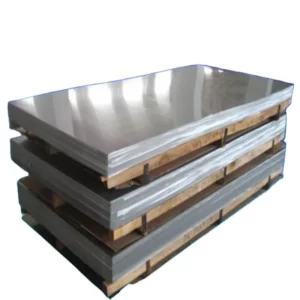
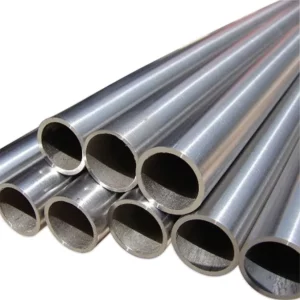
Stainless steel is referred to as stainless steel, it is composed of stainless steel and acid steel two parts, can resist atmospheric corrosion steel called stainless steel, and can resist the corrosion of chemical medium steel called acid steel.
Stainless steel material is a kind of material, with close to mirror brightness, hard and cold touch, belongs to the more avant-garde decorative materials, with excellent corrosion resistance, formability, compatibility and toughness and other series characteristics, used in heavy industry, light industry, daily goods industry and building decoration industry.
It has general corrosion resistance, It has high temperature oxidation resistance, but the oxidation rate will be affected by internal factors such as exposure environment and product morphology. The total heat transfer coefficient of metal depends on the thermal conductivity of metal, but also on other factors. Stainless steel keeps the surface clean, so it can conduct electricity. Metals with higher thermal conductivity have better heat dissipation than other metals.
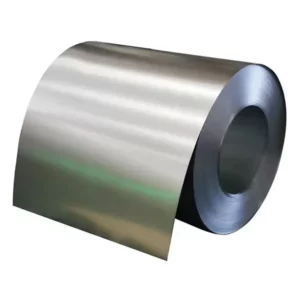
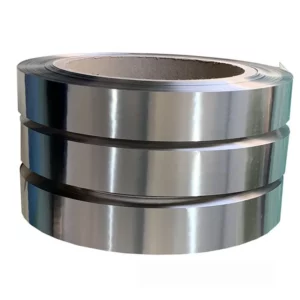
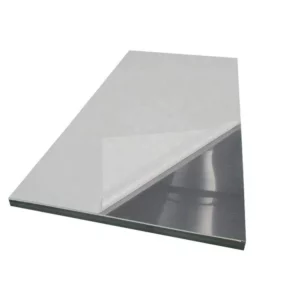
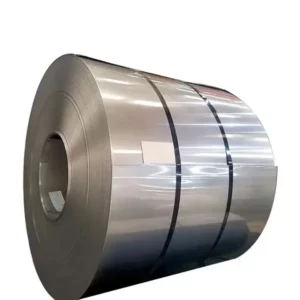
Stainless Steel Strip mainly divided into two types: cold rolled and hot rolled . Stainless steel cold rolled strip always comes in two surface finishes, namely 2B and BA finish. For hot rolled stainless strips, it is usually No.1 finish. Stainless steel coil are inventoried in 200 series, 300 series, 400 series. Different processing processes allow us to finish different complex requirements from customers. Cutting SS strip to specified width, processing the surface, protecting the strip finish by different PVC, PE film. In DELONG STEEL, SS strip with BA+PVC/PE, 2B+PVC/PE, No.4+PVC/PE is very common. Customers even can order different film, like white and black film, blue film, and transparent film. All big stainless steel strip can be divided into many small ones with specified weight.
It has general corrosion resistance,It has high temperature oxidation resistance, but the oxidation rate will be affected by internal factors such as exposure environment and product morphology. The total heat transfer coefficient of metal depends on the thermal conductivity of metal, but also on other factors. Stainless steel keeps the surface clean, so it can conduct electricity. Metals with higher thermal conductivity have better heat dissipation than other metals.
304 stainless steel, as one of the most commonly used types of stainless steel, is an outstanding material when it comes to corrosion resistance, heat resistance, low temperature strength and mechanical properties. In addition, it has exceptional hot-workability so it leaves no heat treatment hardening phenomenon.
304L stainless steel is remarkably similar to 304 stainless steel in their chemical composition. but there is one key difference. In grade 304 stainless steel, the maximum carbon content is set at 0.08%, whereas grade 304L stainless steel has a maximum carbon content of 0.03%. This is why the “L” in 304L can be interpreted as extra-low carbon. It is widely used in the production of equipment and parts that require.
304 stainless steel is a highly-recognized material for its corrosion resistance, heat resistance, low temperature strength and mechanical properties. In addition, it has exceptional hot-workability such as stamping and bending, without leaving heat treatment hardening phenomenon, being one of the most widely used types of stainless steel.
It has general corrosion resistance,It has high temperature oxidation resistance, but the oxidation rate will be affected by internal factors such as exposure environment and product morphology. The total heat transfer coefficient of metal depends on the thermal conductivity of metal, but also on other factors. Stainless steel keeps the surface clean, so it can conduct electricity. Metals with higher thermal conductivity have better heat dissipation than other metals.
Similar to 304 stainless steel, 304L stainless steel has one key difference in its chemical composition. The maximum carbon content of 304 stainless steel is 0.08%, whereas grade 304L stainless steel has a maximum carbon of only 0.03%. This is why the “L” in 304L can be interpreted as extra-low carbon. It is usually used to produce equipment and parts that demand better corrosion resistance and formability.
304 stainless steel is a superior material with regard to corrosion resistance, heat resistance, low temperature strength and mechanical properties, as one of the most widely used types of stainless steel. In addition, it has exceptional hot-workability such as stamping and bending, without leaving heat treatment hardening phenomenon.
310S stainless steel is austenitic chromium-nickel stainless steel, with good oxidation resistance, corrosion resistance, because of a higher percentage of chromium and nickel, so that it has much better creep strength, can continue to work at high temperatures, with good high temperature resistance.