INQUIRY

You are here :

☰ALL CATEGORIES

Deformed Steel Bar

ASTM A615 is a deformed steel standard categorized under American standards. These are generally available in diameter between 9.5 mm and 43 mm, and length between 6 m and 12 m. Generally, the steel bars that fall under this standard are under deformed or plain carbon steel.
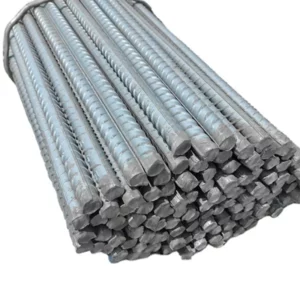
Galvanized reinforcing steel is bare reinforcing steel coated with a protective layer of zinc metal. The zinc coating serves as a barrier to corrosive elements that the rebar is exposed to when embedded in concrete.
TMT means Thermo Mechanical Treatment, which is a thermomechanical process; These TMT steel bars are generally used material in construction for enhanced protection against earthquake and another type of natural disasters. To ensure safety for your structure, TMT steel bars should be resistant to corrosion which helps to obtain a longer life to your structure.
A615 grade 40 steel adds the most benefit when building materials must hold concrete in compression. Strength is one of the differentiators for these two rebar grades. The minimum tensile strength for A615 grade 40 steel is 70.05 ksi. It has a minimum yield strength of 40 ksi.
ASTM A615 is a deformed steel standard categorized under American standards. These are generally available in diameter between 9.5 mm and 43 mm, and length between 6 m and 12 m. Generally, the steel bars that fall under this standard are under deformed or plain carbon steel.
BS4449 is yet another deformed steel bar standard. It is also differentiated as per European standards. When it comes to manufacturing, the steel bars falling in this standard are also hot rolled, which means that they are also used for general purposes, i.e. in common construction projects.
Epoxy resin coated steel bar is an epoxy resin protective coating prepared on the surface of ordinary steel bar by electrostatic spraying powder high temperature sintering process. The coating has excellent chemical corrosion resistance and does not react with acid and alkali. And the coating has anti-permeability, so it can delay the corrosion medium (such as water, oxygen, chloride, etc.) contact with the steel, so that its corrosion resistance life is greatly extended.
B500A grade steel is usually used for steel mesh products while B500B grade steel is used for steel bars. B500C steel is rarely required, and it is always worthwhile for structural engineers to check whether B500B grade steel can be used instead of B500C, because B500C usually has a significant cost overhead.
B1499.2-2007 is a European standard steel bar. Generally, GB1499.2-2007 standard deformed steel bars are made using the hot-rolled method, meaning that these are the most common types of deformed steel bars. These are available in different lengths and sizes, all the way from 6 mm in diameter to 50 mm in diameter. When it comes to length, 9 m and 12 m are the common sizes.
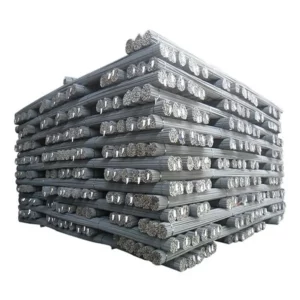
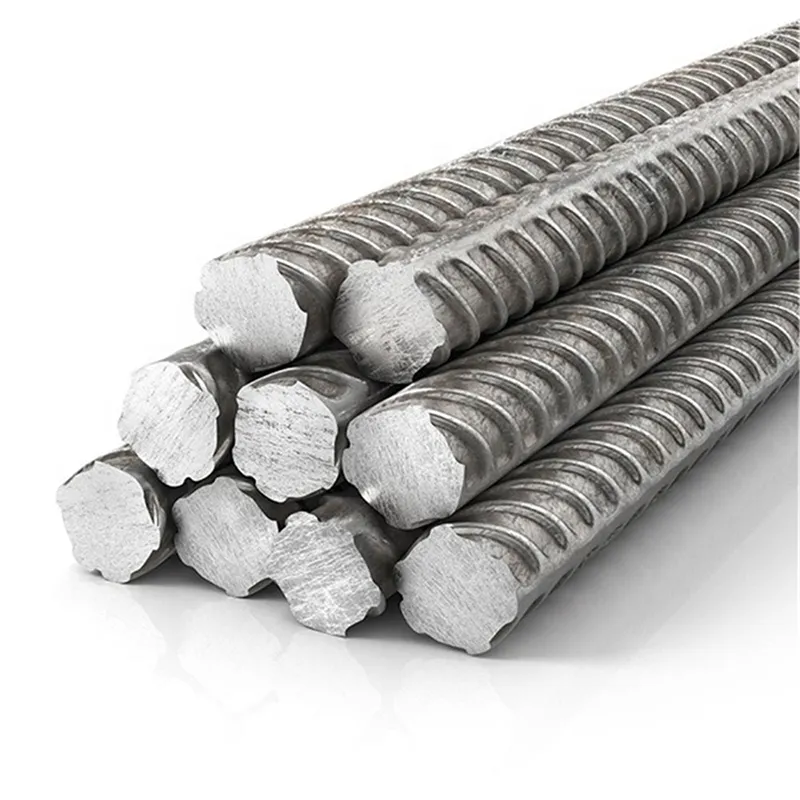
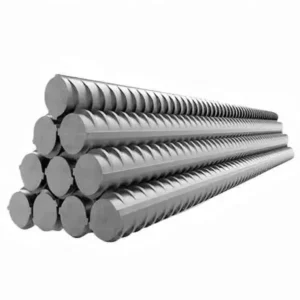
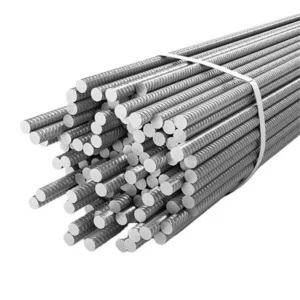
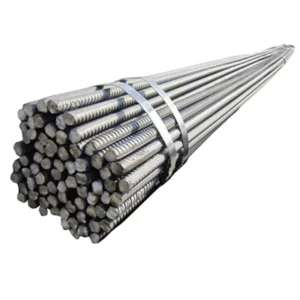
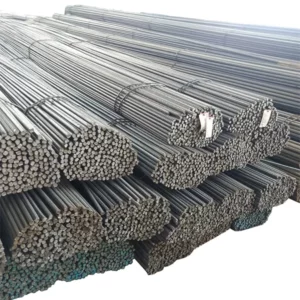
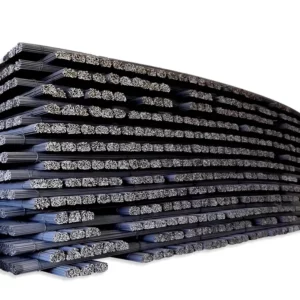
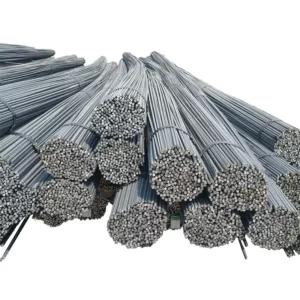
Rebar is a common name for hot-rolled ribbed steel bars. The grade of ordinary hot-rolled steel bar is composed of HRB and the minimum yield point of the grade. H, R, and B are the first letters of the three words: Hotrolled, Ribbed, and Bars respectively. Rebar is a ribbed steel bar on the surface, also known as ribbed steel bar, usually with two longitudinal ribs and transverse ribs evenly distributed along the length. The shape of the transverse ribs is spiral, herringbone, and crescent. It is expressed in millimeters of the nominal diameter. The nominal diameter of ribbed steel bars is equivalent to the nominal diameter of smooth round steel bars with equal cross-sections. The nominal diameter of the steel bars is 8-50 mm, and the recommended diameters are 8, 12, 16, 20, 25, 32, and 40 mm. Ribbed steel bars mainly bear tensile stress in concrete. Ribbed steel bars have greater bonding capacity with concrete due to the action of ribs, so they can better withstand external forces. 
ASTM A615 is a deformed steel standard categorized under American standards. These are generally available in diameter between 9.5 mm and 43 mm, and length between 6 m and 12 m. Generally, the steel bars that fall under this standard are under deformed or plain carbon steel.
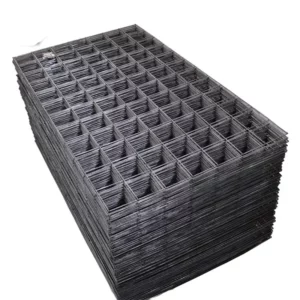
Steel mesh is also known as: welded steel mesh, reinforcing bar welding net, reinforcing steel welding net, reinforcing steel welding mesh, reinforcing steel mesh and so on. The longitudinal reinforcement and the transverse reinforcement are arranged at a certain distance at a certain distance, and each of them is welded at the right angle and all the intersections are welded together. Mechanical Properties: Minimum Yield Limit = 500 N/mm² Minimum Tensile Strength = 550 N/mm² Minimum Elongation at Break = 5%, 8% Raw material = SAE 1006, SAE 1008, SAE 1010 quality or mesh quality wire rod is used.